Standard REST
Conventional request and response formats with no proprietary library; usable from any language or framework.
 ArtinBot
The ready-made widget is the fastest path, but not always the right place. If the conversation belongs inside your panel, app or internal system, the API gives you the same knowledge and behaviour without imposing a look.
A widget is a design decision already made for you: a bubble in the corner with a fixed flow. For a public site that decision is right and gets you live in minutes. Inside a product, the same decision can clash with your interface patterns.
The API removes that layer. You send the message and receive an answer with its source citations; how and where that answer renders is your team's call. Knowledge, strict mode and source citation are identical on both paths.
Conventional request and response formats with no proprietary library; usable from any language or framework.
As in the widget, each answer points back to the document it came from so you can surface it in your own interface.
The same binding to your sources applies over the API; if the answer is not in them, nothing is invented.
Push leads, tickets or conversation-end events to your own system without polling.
In-product guidance should speak the panel's design language, not sit in an external bubble.
In a native app a web widget is not an option at all, and the API is the only path.
For assistants inside existing systems, a standard interface is simpler than embedding a widget.
If you run your own messaging channel, the same knowledge can sit behind it.
Least work, fastest launch.
Maximum control.
No. The two paths are independent and you can use only the API.
Yes. Knowledge sources, strict mode and citations are identical on both; only the presentation layer differs.
Yes, and they depend on the plan. Details are on the pricing page.
Any language that can make an HTTP request; no proprietary library is needed.
For pushing leads and tickets into your system, a webhook is usually the simpler route. Details are on the CRM integration page.
Let's book a short technical session to review your integration scenario.
آرتینمگ
این مطالب در آرتینمگ، رسانهی تخصصی گروه آرتین، منتشر شدهاند.
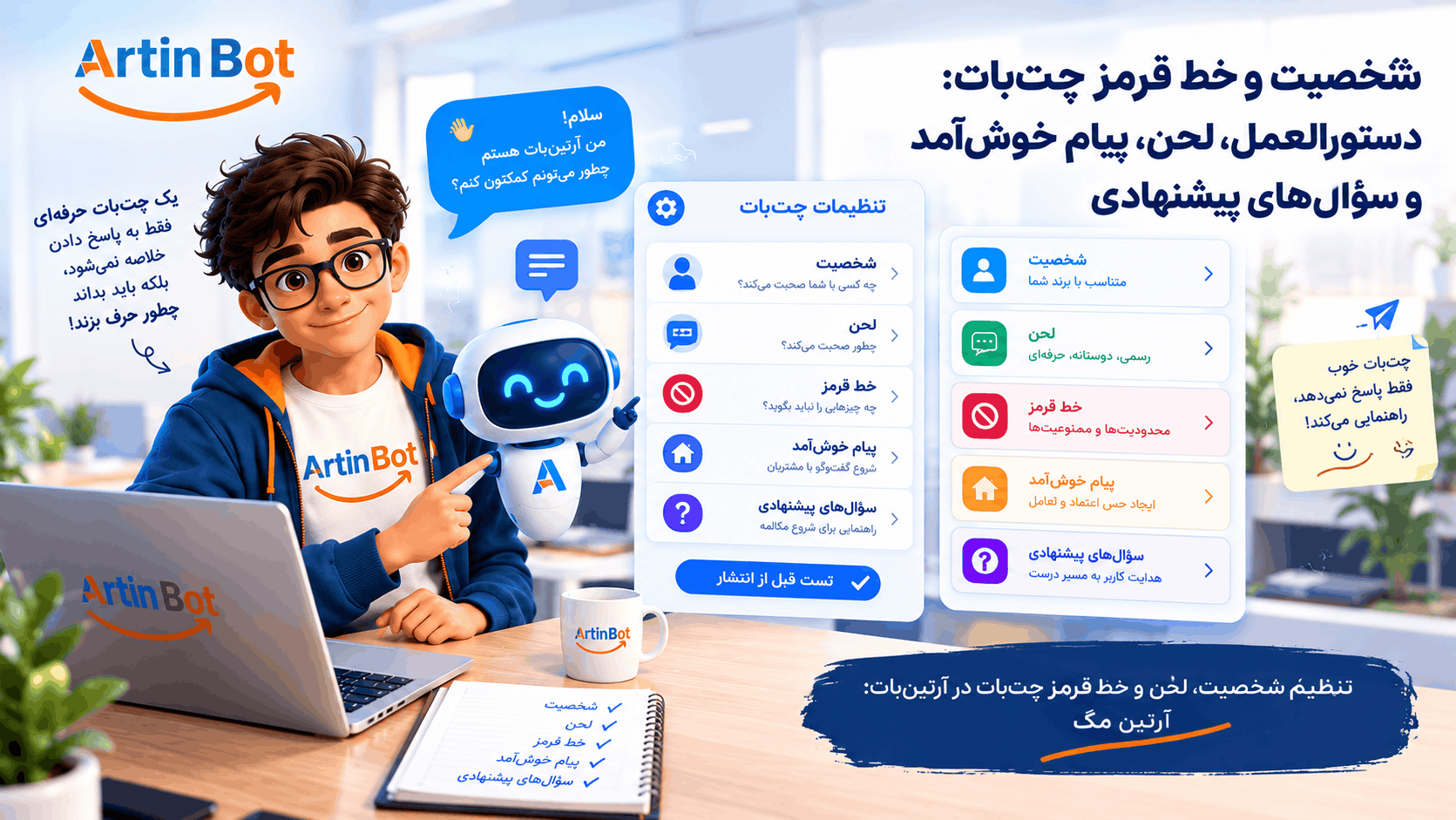
چتبات شما با لحن چه کسی حرف میزند و چه چیزی را هرگز نباید بگوید؟ راهنمای تنظیم دستورالعمل، لحن، خط قرمز، پیام خوشآمد و سؤالهای پیشنهادی در آرتینبات، با تست پیش از انتشار و محدودیتها.
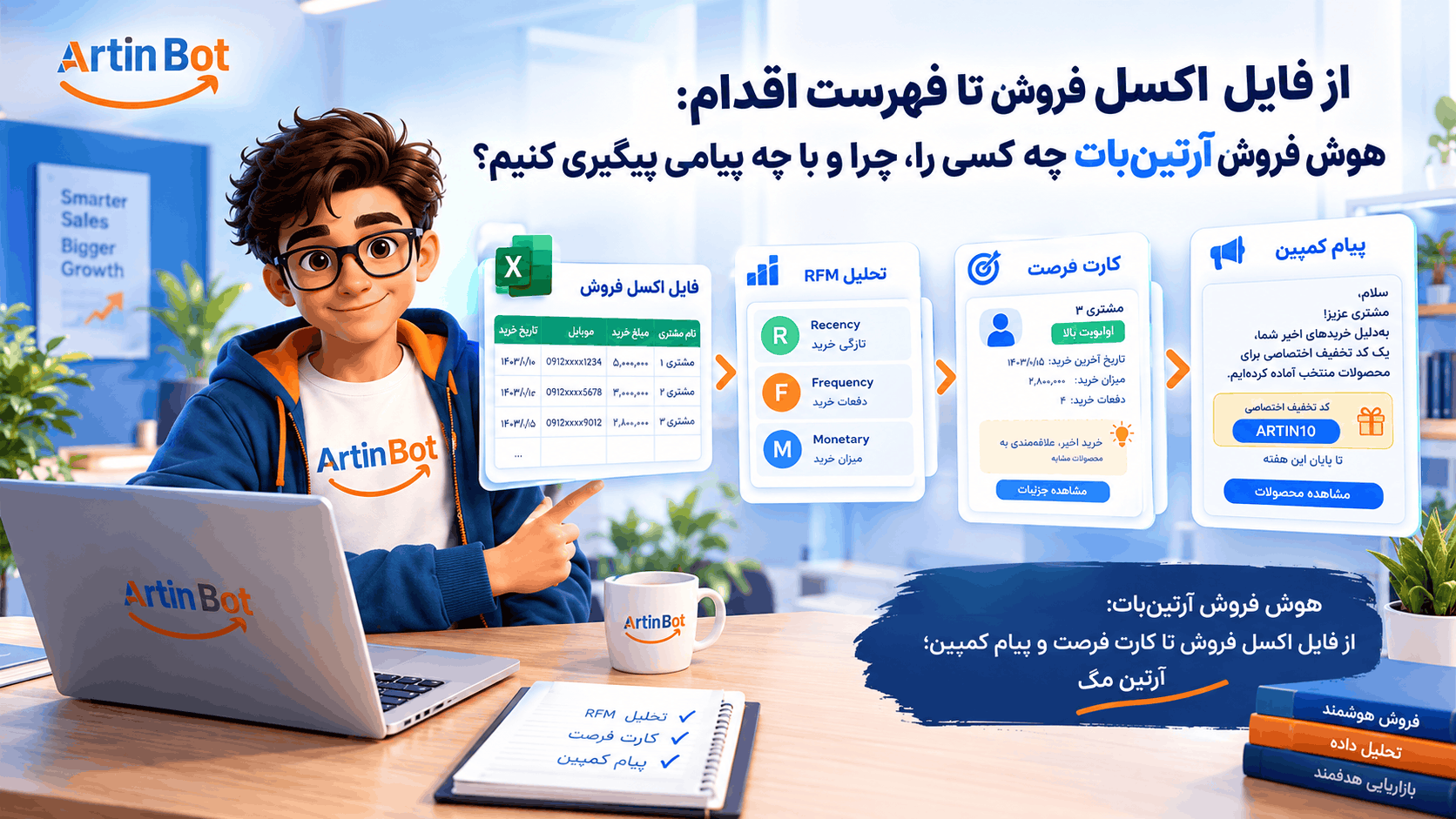
فایل فروشتان پر از مشتری است ولی نمیدانید به کدامشان چه بگویید. راهنمای هوش فروش آرتینبات: بارگذاری اکسل، تحلیل RFM، کارت فرصت، پیام کمپین و کد تخفیف اختصاصی، با محدودیتها و هزینهها.
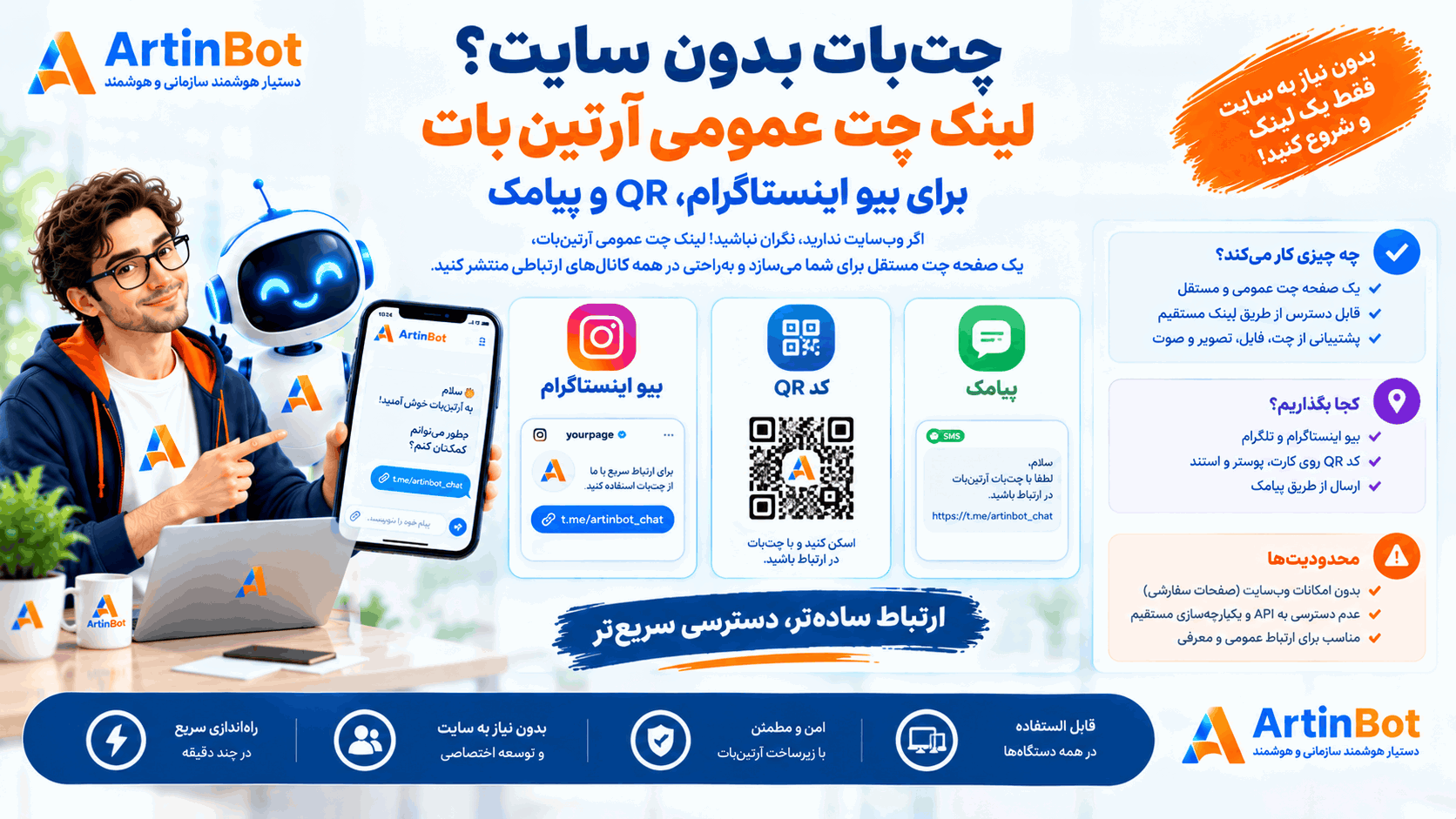
پیج دارید ولی سایت ندارید؟ لینک چت عمومی آرتینبات یک صفحهی چت مستقل میسازد که میتوانید در بیو، QR یا پیامک منتشر کنید. چه چیزی کار میکند، کجا بگذاریم و محدودیتها چیست.
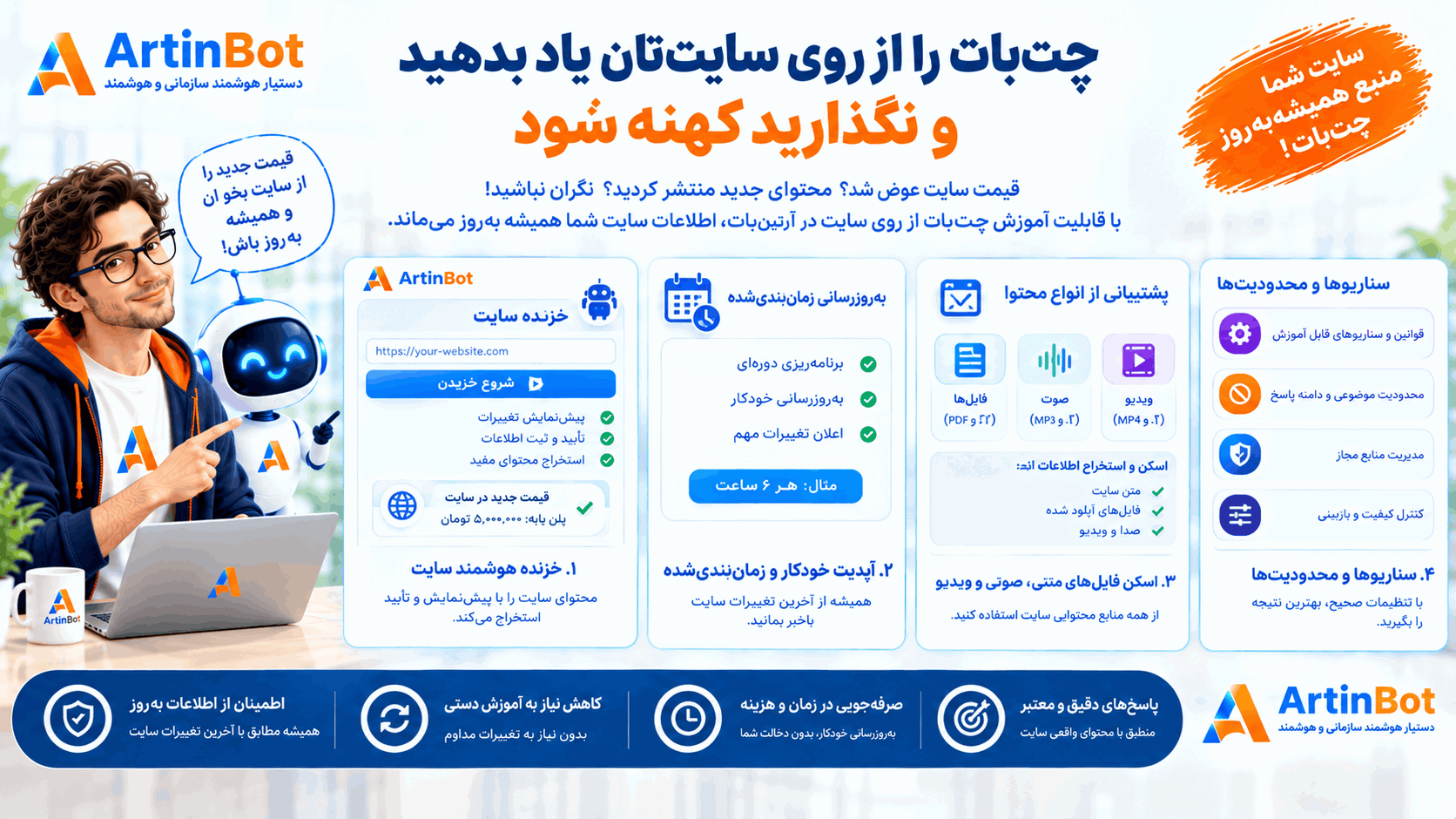
قیمت سایت عوض شد ولی چتبات هنوز عدد قدیمی را میگوید. راهنمای آموزش چتبات از روی سایت در آرتینبات: خزنده با پیشنمایش و تأیید، بهروزرسانی زمانبندیشده، فایلهای اسکنشده، صوت و ویدیو، سناریوها و محدودیتها.
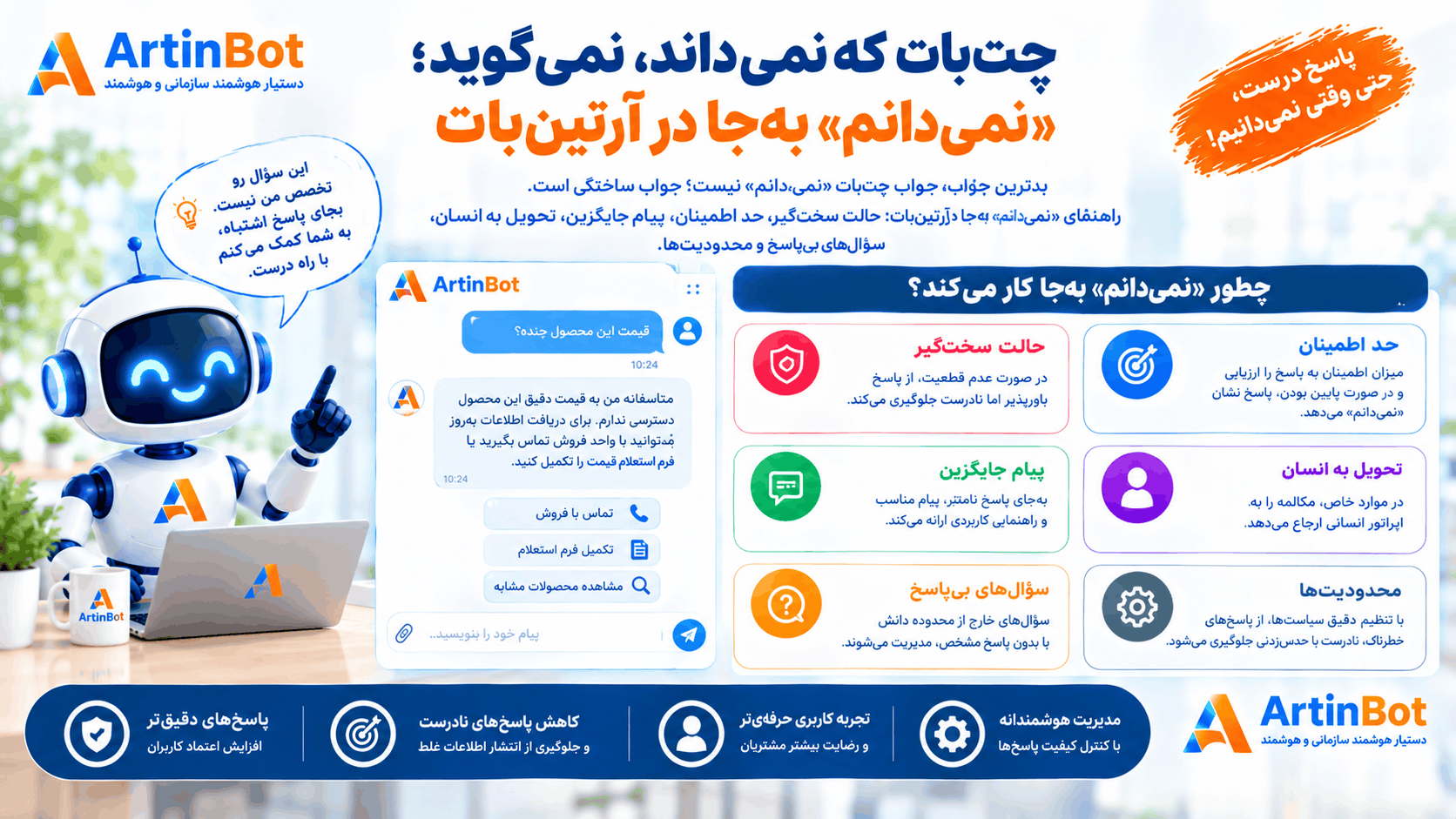
بدترین جواب چتبات «نمیدانم» نیست؛ جواب ساختگی است. راهنمای «نمیدانم» بهجا در آرتینبات: حالت سختگیر، حد اطمینان، پیام جایگزین، تحویل به انسان، سؤالهای بیپاسخ و محدودیتها.
بدترین جواب چتبات «نمیدانم» نیست؛ جواب ساختگی است. راهنمای «نمیدانم» بهجا در آرتینبات: حالت سختگیر، حد اطمینان، پیام جایگزین، تحویل به انسان، سؤالهای بیپاسخ و محدودیتها.
شرکت هوش گستر فردا آرتین چند محصول هوش مصنوعی فارسی میسازد. هر کدام کار خودش را میکند — اینها را ببینید تا بدانید کدام به کار شما میآید.
 شرکت هوش گستر فردا آرتینشرکتسازندهی محصولات هوش مصنوعی فارسیشرکت هوش گستر فردا آرتین، مستقر در پارک علم و فناوری خراسان رضوی، سازندهی شش محصول هوش مصنوعی فارسی و یک رسانهی تخصصی است. اینجا میبینید کدام راهکار به کار سازمان شما میآید و مرز هرکدام کجاست.artinbi.ir
 داناباتمحصولدستیار سازمانی آفلاین، داخل شبکهی خودتاندانشنامه و دستیار هوشمند سازمانی که در استقرار On-Premise داخل شبکهی داخلی شما مستقر میشود. به فارسی از اتوماسیون اداری، دیتابیس زنده و اسناد سازمان سؤال بپرسید — بدون اینکه دادهای از سازمان خارج شود.در استقرار On-Premise داخل شبکهی خودتان نصب میشود و داده از سازمان خارج نمیشودdana-bot.ir
 AgentsHubمحصولبستر یکپارچهسازی و حاکمیت ایجنت سازمانیایجنتهای سازمان از هر پیمانکار و با هر فناوری، زیر یک هویت واقعی کاربر، یک سیاست داده و یک لاگ ممیزی مشترک. کارکنان بهجای چند سامانه، یک در میبینند.هر واحد ایجنت خودش را ساخته و هیچکس نمیداند چه کسی چه کردagentshub.ir
 جعبه ابزار هوش مصنوعی آرتینمحصولبیش از ۲۰ ابزار AI اداری و سندیبیش از ۲۰ ابزار هوش مصنوعی سازمانی در یک پنل: نامهساز، مترجم اداری، خلاصهساز، تولید تصویر، تبدیل صوت به متن، OCR، چارتساز و پاورپوینتساز.نامه، ترجمه، خلاصه، OCR و پاورپوینت — همه در یک پنل سازمانیtoolsai.ir
 تلنتایآیمحصولاپ هوش مصنوعی فارسی برای کاربر عمومیاپلیکیشن فارسی هوش مصنوعی برای استفادهی روزمره: گفتگو، تولید و ویرایش تصویر، لوگوساز و اتاق جادویی. روی اندروید و وب، با یک اشتراک واحد.همهی ابزارهای AI روزمره در یک اپ فارسی، بدون فیلترشکنtalentai.ir
 چاریکمحصولهوش تجاری فروش و بازگرداندن مشتریچاریک فایل فروش شما را تحلیل میکند، مشتریهای ازدسترفته و در خطر ریزش را پیدا میکند و برای هرکدام یک پیشنهاد و پیام هدفدار بههمراه کد تخفیف میسازد تا برگردند.مشتریهایی که دیگر خرید نمیکنند را پیدا و برمیگرداندcharik.ir
 آرتینمگرسانهمجلهی تخصصی هوش مصنوعی به زبان فارسیاخبار، مقالات تحلیلی و آموزش هوش مصنوعی به زبان فارسی. آرتینمگ رسانهی مستقل گروه آرتین است و محصول نمیفروشد — اینجا یاد میگیرید، بعد تصمیم میگیرید.artinmag.ir
