Knows the whole site
Give it a sitemap and every page is read — not only the home page and the main menu.
 ArtinBot
Most sites do not lack content; the content simply cannot be found. An assistant that has read the whole site gives an answer instead of a list of links, and shows where it came from.
On a site with a few years of content behind it, almost every question is answered somewhere — a service page, a blog post, a PDF. But a first-time visitor does not know your menu structure and has no patience for browsing; or they search for a word you never used in the text.
Conversational guidance closes that gap: the visitor asks in their own words and gets an answer together with a link to the source page. The effect shows up both in the experience and in the deep pages that have never seen traffic.
Give it a sitemap and every page is read — not only the home page and the main menu.
Each answer links to the page it came from, so the visitor can read on right there.
When a question ends in an action, the visitor is guided to the right sign-up, form or contact page.
As pages change, the assistant's knowledge follows; answers do not have to be maintained by hand.
When there are more pages than a menu can carry and visitors get lost in the depth.
Choosing between dozens of similar models, where filters are not enough and people want an explanation.
When a customer does not know which service fits and needs to reach the right team.
Paid traffic that arrives with a question and leaves immediately if it goes unanswered.
Matching words against page text.
Answers built from that site's own content.
No, it sits alongside them. A menu serves people who know the structure; the assistant serves people who only know their question.
It does not guess. It says the answer is not in its sources and, where needed, hands the conversation to an agent.
Its sources are your page URLs or sitemap, so refreshing them makes the answers reflect the new content.
Yes. The widget goes live by adding a short snippet to your template and does not depend on the site's technology.
Yes, files can be added to the sources separately; not everything has to be published as a web page.
Give it your sitemap and see right away how it answers the questions your visitors actually ask.
آرتینمگ
این مطالب در آرتینمگ، رسانهی تخصصی گروه آرتین، منتشر شدهاند.
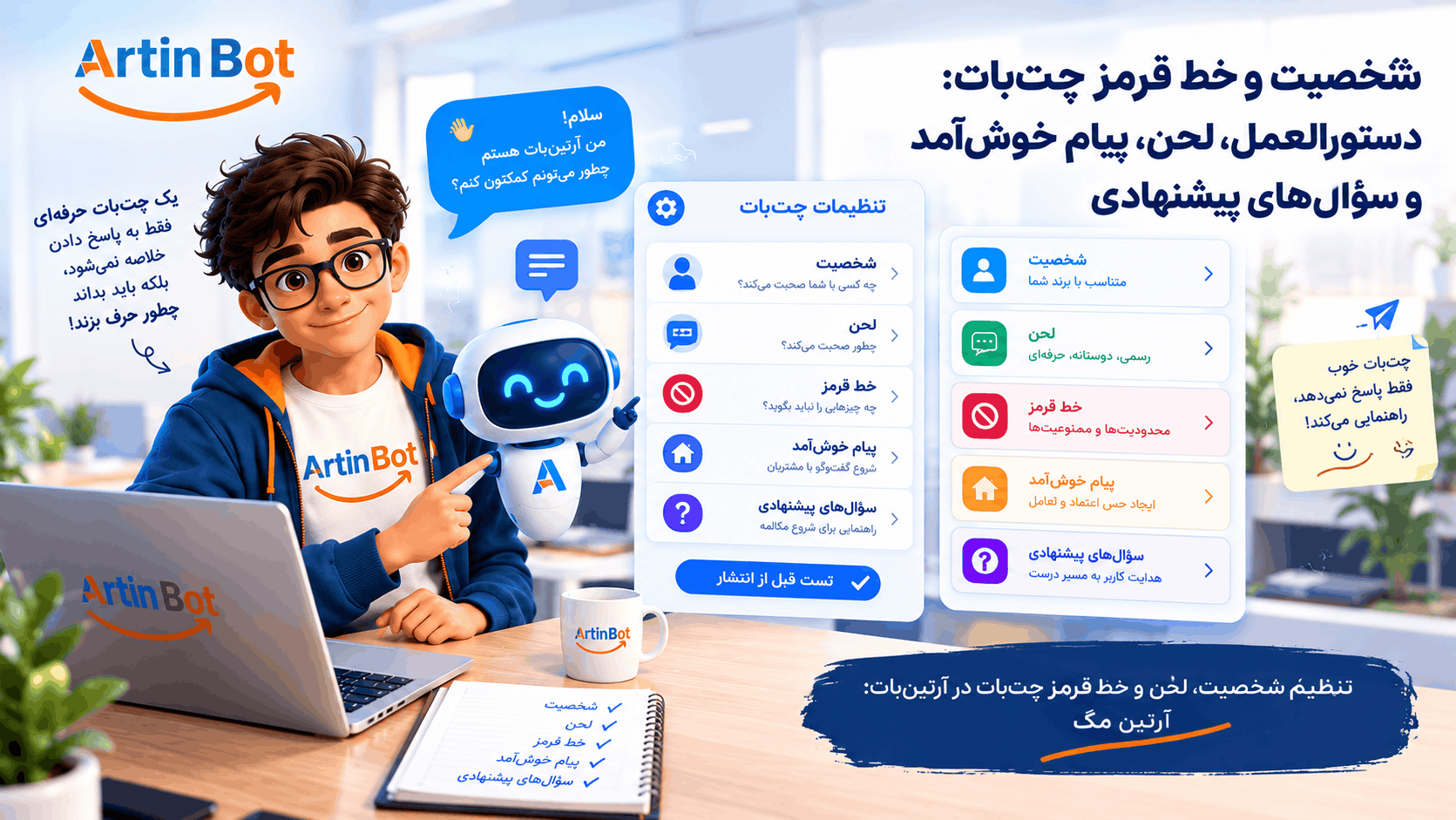
چتبات شما با لحن چه کسی حرف میزند و چه چیزی را هرگز نباید بگوید؟ راهنمای تنظیم دستورالعمل، لحن، خط قرمز، پیام خوشآمد و سؤالهای پیشنهادی در آرتینبات، با تست پیش از انتشار و محدودیتها.
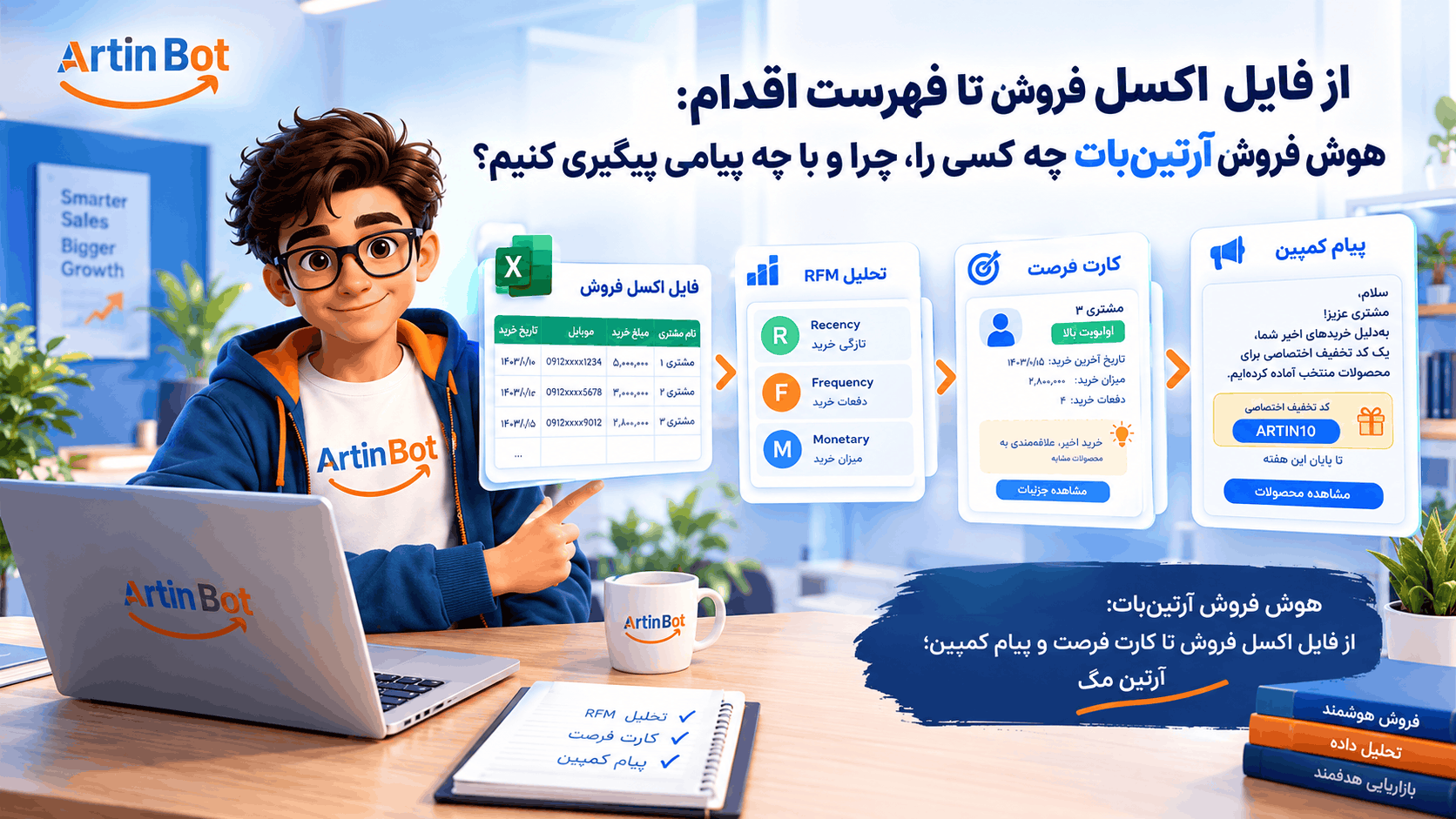
فایل فروشتان پر از مشتری است ولی نمیدانید به کدامشان چه بگویید. راهنمای هوش فروش آرتینبات: بارگذاری اکسل، تحلیل RFM، کارت فرصت، پیام کمپین و کد تخفیف اختصاصی، با محدودیتها و هزینهها.
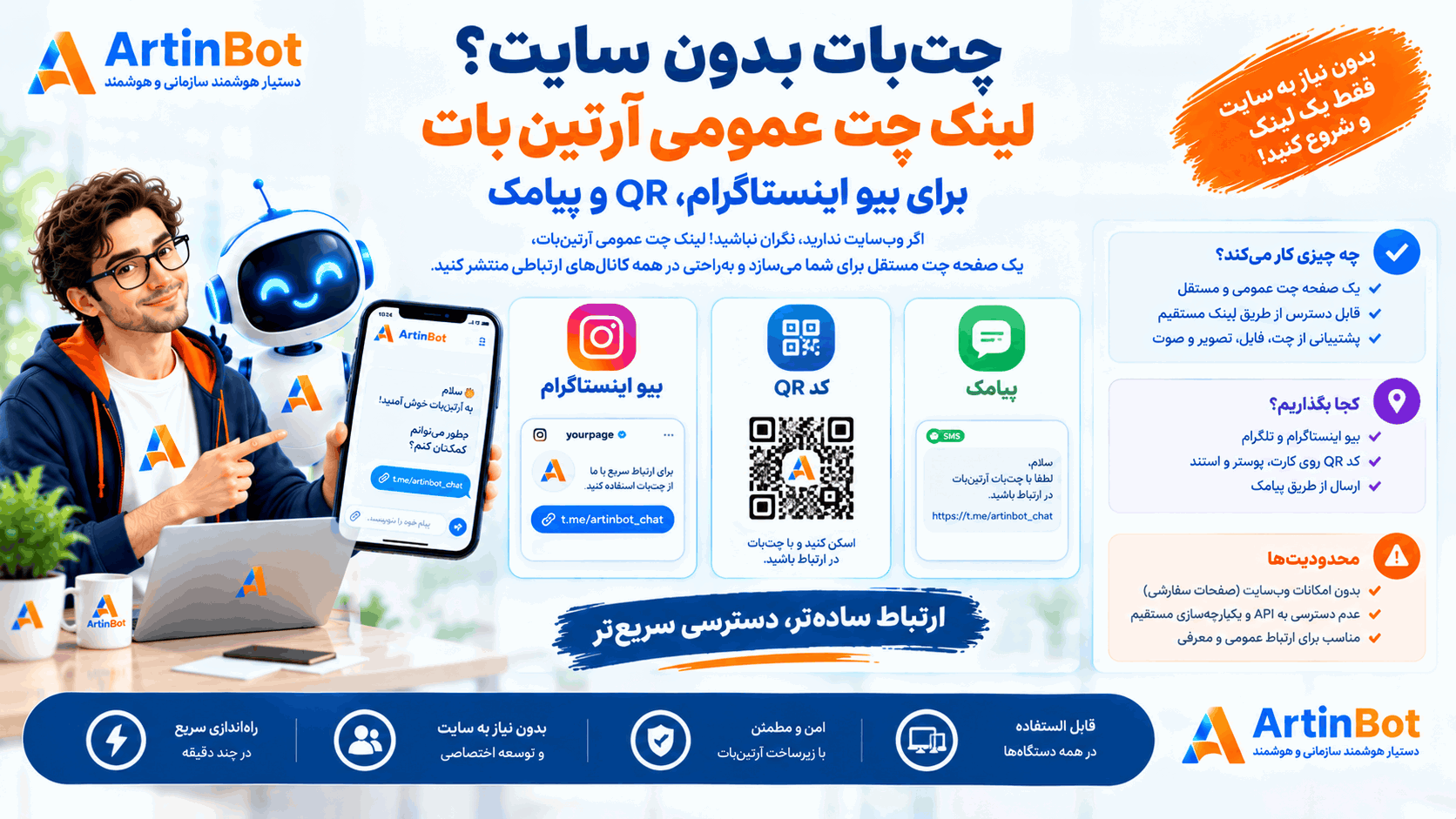
پیج دارید ولی سایت ندارید؟ لینک چت عمومی آرتینبات یک صفحهی چت مستقل میسازد که میتوانید در بیو، QR یا پیامک منتشر کنید. چه چیزی کار میکند، کجا بگذاریم و محدودیتها چیست.
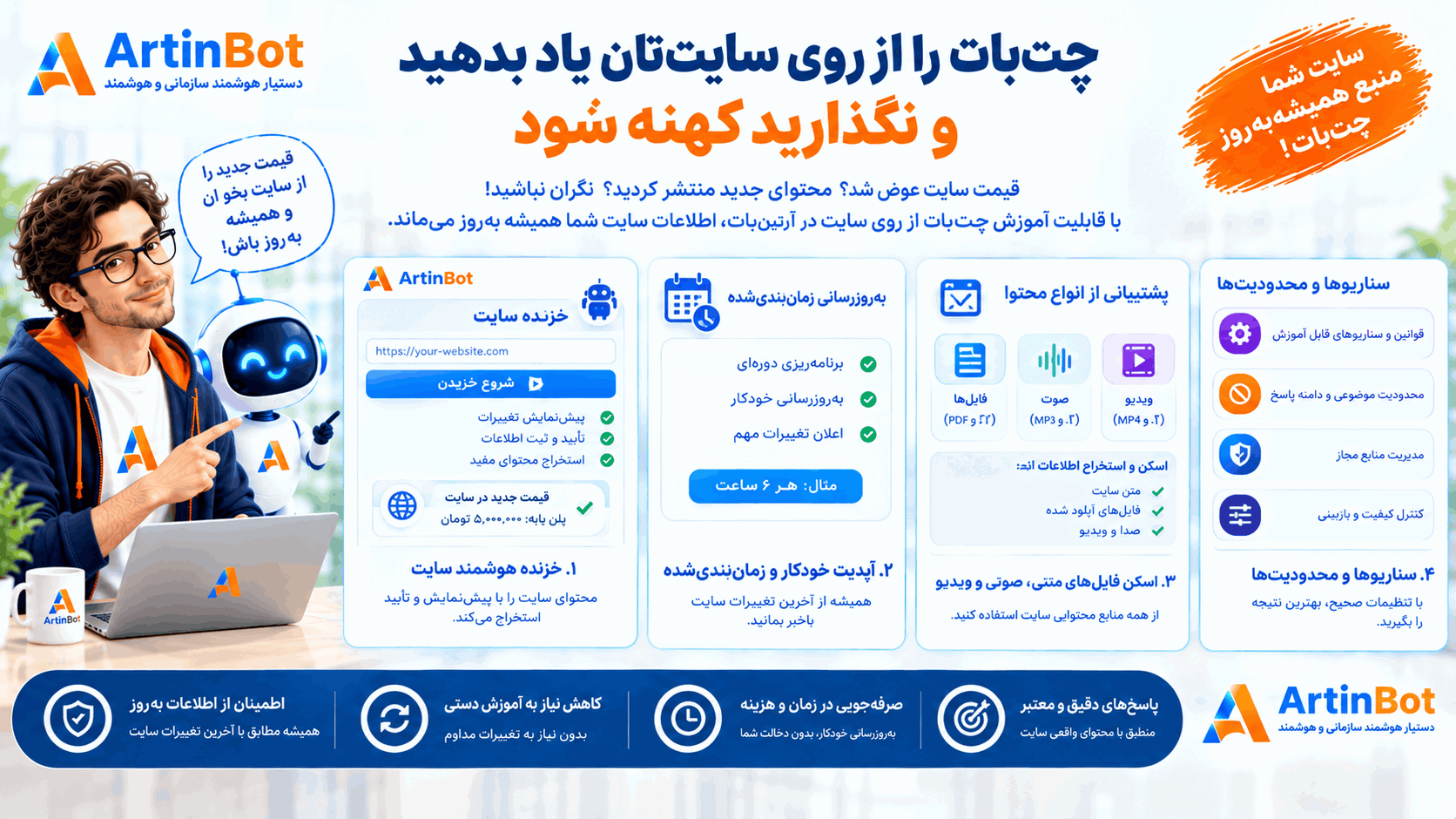
قیمت سایت عوض شد ولی چتبات هنوز عدد قدیمی را میگوید. راهنمای آموزش چتبات از روی سایت در آرتینبات: خزنده با پیشنمایش و تأیید، بهروزرسانی زمانبندیشده، فایلهای اسکنشده، صوت و ویدیو، سناریوها و محدودیتها.
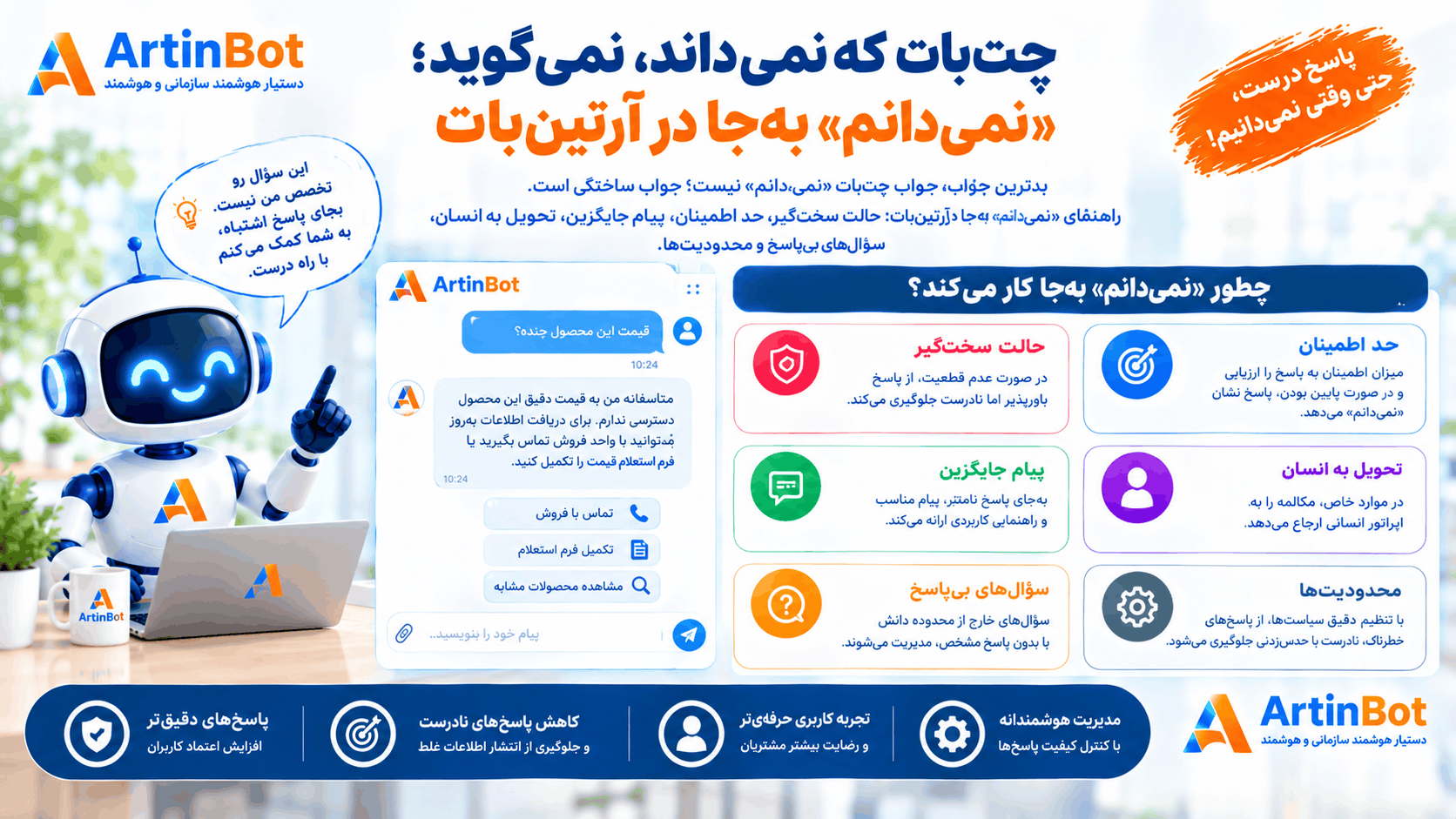
بدترین جواب چتبات «نمیدانم» نیست؛ جواب ساختگی است. راهنمای «نمیدانم» بهجا در آرتینبات: حالت سختگیر، حد اطمینان، پیام جایگزین، تحویل به انسان، سؤالهای بیپاسخ و محدودیتها.
بدترین جواب چتبات «نمیدانم» نیست؛ جواب ساختگی است. راهنمای «نمیدانم» بهجا در آرتینبات: حالت سختگیر، حد اطمینان، پیام جایگزین، تحویل به انسان، سؤالهای بیپاسخ و محدودیتها.
شرکت هوش گستر فردا آرتین چند محصول هوش مصنوعی فارسی میسازد. هر کدام کار خودش را میکند — اینها را ببینید تا بدانید کدام به کار شما میآید.
 شرکت هوش گستر فردا آرتینشرکتسازندهی محصولات هوش مصنوعی فارسیشرکت هوش گستر فردا آرتین، مستقر در پارک علم و فناوری خراسان رضوی، سازندهی شش محصول هوش مصنوعی فارسی و یک رسانهی تخصصی است. اینجا میبینید کدام راهکار به کار سازمان شما میآید و مرز هرکدام کجاست.artinbi.ir
 داناباتمحصولدستیار سازمانی آفلاین، داخل شبکهی خودتاندانشنامه و دستیار هوشمند سازمانی که در استقرار On-Premise داخل شبکهی داخلی شما مستقر میشود. به فارسی از اتوماسیون اداری، دیتابیس زنده و اسناد سازمان سؤال بپرسید — بدون اینکه دادهای از سازمان خارج شود.در استقرار On-Premise داخل شبکهی خودتان نصب میشود و داده از سازمان خارج نمیشودdana-bot.ir
 AgentsHubمحصولبستر یکپارچهسازی و حاکمیت ایجنت سازمانیایجنتهای سازمان از هر پیمانکار و با هر فناوری، زیر یک هویت واقعی کاربر، یک سیاست داده و یک لاگ ممیزی مشترک. کارکنان بهجای چند سامانه، یک در میبینند.هر واحد ایجنت خودش را ساخته و هیچکس نمیداند چه کسی چه کردagentshub.ir
 جعبه ابزار هوش مصنوعی آرتینمحصولبیش از ۲۰ ابزار AI اداری و سندیبیش از ۲۰ ابزار هوش مصنوعی سازمانی در یک پنل: نامهساز، مترجم اداری، خلاصهساز، تولید تصویر، تبدیل صوت به متن، OCR، چارتساز و پاورپوینتساز.نامه، ترجمه، خلاصه، OCR و پاورپوینت — همه در یک پنل سازمانیtoolsai.ir
 تلنتایآیمحصولاپ هوش مصنوعی فارسی برای کاربر عمومیاپلیکیشن فارسی هوش مصنوعی برای استفادهی روزمره: گفتگو، تولید و ویرایش تصویر، لوگوساز و اتاق جادویی. روی اندروید و وب، با یک اشتراک واحد.همهی ابزارهای AI روزمره در یک اپ فارسی، بدون فیلترشکنtalentai.ir
 چاریکمحصولهوش تجاری فروش و بازگرداندن مشتریچاریک فایل فروش شما را تحلیل میکند، مشتریهای ازدسترفته و در خطر ریزش را پیدا میکند و برای هرکدام یک پیشنهاد و پیام هدفدار بههمراه کد تخفیف میسازد تا برگردند.مشتریهایی که دیگر خرید نمیکنند را پیدا و برمیگرداندcharik.ir
 آرتینمگرسانهمجلهی تخصصی هوش مصنوعی به زبان فارسیاخبار، مقالات تحلیلی و آموزش هوش مصنوعی به زبان فارسی. آرتینمگ رسانهی مستقل گروه آرتین است و محصول نمیفروشد — اینجا یاد میگیرید، بعد تصمیم میگیرید.artinmag.ir
